You will note that I wrote about misadventures moving Central Admin a while back (http://bobklass.blogspot.com/2008/03/how-to-move-central-admin-site-even-if.html). Maybe I should have read my post before I went to do it again, but things seem to have worked out OK this time, sort of doing it the right way.
We added two more servers to our main North American farm (now four WFE's and an indexer, and I'm not sure how we will distribute other shared services - Enterprise stuff is new to us). We had previously been running Central Admin on one of our two WFE's and the indexer ONLY indexing. One of the new WFE's is to be dedicated to indexing, and it seemed like a good idea to move Central Admin there. This will make even more sense when we add decent load balancing to this setup.
So I ran the Config Wizard for the first time on the freshly built box and indicated that it should host Central Admin. When it was all done, it pops up Central Admin, running off the old host. Hmmm. Time to read my old post. Those misadventures didn't really seem to be relevant, but I was considering running the Config Wizard on the old host to remove it. Or mess with alternate access mappings. I may still have to do that - there is some baggage in there.
In the end, though, I typed in the URL to the new host and Central Admin was running (in two places!). From the new one I just stopped it on the old and everything seems to be fine. I guess that was the right way!
P.S. - There was just one more thing. After an IIS reset the CA site stopped functioning (I don't even care why). So I went into ../_admin/AlternateUrlCollections.aspx and changed CA there to point to my new site. NOW I'm golden.
Monday, July 21, 2008


Wednesday, July 16, 2008
Elegant Solution or Kludge?
According to those who know, SharePoint databases shouldn't get extremely large. What I gather this means, is 50 GB is large, 100 GB is very large and 200 GB is excessively large. In an industry like mine, that's not a lot of data.
Our main SharePoint litigation support application has been a big hit, and it is beyond very large and on its way to being excessively large. We present visitors to this site a "My Sites" table of contents as there are hundreds of sites but very few users are members of more than a couple sites.
With the success of the application, it is easy to foresee growth many times what it is today, so we needed a way to deal with this. Our solution is to have multiple site collections and a custom table of contents that represents them all in one place. Users create new sites self-service, so we just force them to the one site collection that is open for new cases. It's seamless to the users - they do not need to know anything about what is under the hood.
In answer to the title question "Elegant Solution of Kludge," I'll glom the two together and call it an elegant kludge. What do you think?
Our main SharePoint litigation support application has been a big hit, and it is beyond very large and on its way to being excessively large. We present visitors to this site a "My Sites" table of contents as there are hundreds of sites but very few users are members of more than a couple sites.
With the success of the application, it is easy to foresee growth many times what it is today, so we needed a way to deal with this. Our solution is to have multiple site collections and a custom table of contents that represents them all in one place. Users create new sites self-service, so we just force them to the one site collection that is open for new cases. It's seamless to the users - they do not need to know anything about what is under the hood.
In answer to the title question "Elegant Solution of Kludge," I'll glom the two together and call it an elegant kludge. What do you think?
Monday, July 07, 2008
In Training
Well, I am, sort of. Some of you might not know that I used to run marathons (very slowly). I quit in 2000 after about 13 years and 36 marathons (including three or so where I did not finish, but I did at least 20 miles). My time varied from 4-5 hours. Back in that day, I did have to follow a strict training schedule in order to get to the STARTING line (more important than getting to the finish).
Now ... not so much. I usually do the Turkey Trot in Cleveland on Thanksgiving (5 miler). And I may do the Johnnycake Jog in Painesville this month, just so as to get together with my old neighbor, Chris Emminger. My one big event is something I've done for the last 10 years or so, the Fairport Harbor Lighthouse Triathlon. It's a real mini - 500M swim in Lake Erie (can be a little choppy), 20 KM bike, 5 KM run.
I actually have been "training" a little - a couple bike rides, a very little bit of swimming. Lots of excessive eating and drinking (no, wait a minute). The first time I did the race I found out about it two days before and "trained" for one day. It's always fun (see last year's blog on it). July 27th, Fairport Harbor - come on out!
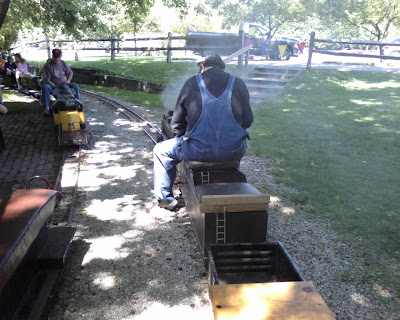
The other side of the "training" thing was going out to see my friend Frank Foti's steam engine running this weekend. This hobby is definitely model trains gone wild. They carry many passengers on these miniature trains, winding through the lovely woods in Kirtland.
Here is their track from the air.
Frank - Thanks for the ride.
Now ... not so much. I usually do the Turkey Trot in Cleveland on Thanksgiving (5 miler). And I may do the Johnnycake Jog in Painesville this month, just so as to get together with my old neighbor, Chris Emminger. My one big event is something I've done for the last 10 years or so, the Fairport Harbor Lighthouse Triathlon. It's a real mini - 500M swim in Lake Erie (can be a little choppy), 20 KM bike, 5 KM run.
I actually have been "training" a little - a couple bike rides, a very little bit of swimming. Lots of excessive eating and drinking (no, wait a minute). The first time I did the race I found out about it two days before and "trained" for one day. It's always fun (see last year's blog on it). July 27th, Fairport Harbor - come on out!
 |
| From "Summer" 2008 |
The other side of the "training" thing was going out to see my friend Frank Foti's steam engine running this weekend. This hobby is definitely model trains gone wild. They carry many passengers on these miniature trains, winding through the lovely woods in Kirtland.
Here is their track from the air.
Frank - Thanks for the ride.
Thursday, July 03, 2008
Clapton, Return to Forever and Patrick Sweany
Of these varied shows I've gone to recently, the most pleasing was the wonderful Patrick Sweany (Band) at the Rock Hall last night. Let me explain.
I saw Eric Clapton at Blossom a few weeks back. I had never seen him before (it's hard to believe because I have HUNDREDS of his recordings), and I wasn't doing anything better, so I grabbed the GPS, jumped in the tC and headed South. Traffic was horrible, and if it weren't for a bold move (passing the Blossom exit and using the GPS to take back roads), I would have been late, as was much of the crowd.
What we were treated to was vintage Clapton - sounding much like a 90's show of his. Doyle Bramhall II was his second guitarist. Even though he is a major talent, I wished I could see Clapton with Derek Trucks - or both Trucks and Bramhall. Trucks is amazing. As it was, it still was a quality show, and very exciting in parts.
I had poor seats, and the venue is too big - these are the reason I had never seen him anyway - he always plays big venues. Schoolboy was there with his iRiver H120 Rockbox and was sitting right in front of a speaker, so the recording sounds pretty good.
I saw Return to Forever last week in Cleveland's lovely (sort of) Plain Dealer Pavilion (at least the place is lovelier than the name). It's a 5500 seat outdoor venue with a pretty urban setting and a cute tent. Unfortunately, the seats (at least on the floor) are very uncomfortable (too close together), and the sound is bad. It was a first for me for both the band and the venue.
Return to Forever always was one of my favorite fusion bands. This re-incarnation of the band is the perfect line-up of virtuosos - Lenny White, Stanley Clarke, Al Dimeola, and Chick Corea. They played some of their challenging repertoire and schoolboy's recording shows that the performance was somewhat sloppy. The solos by Al and Chick made it all worthwhile, but the poor sound and seating made the concert a disappointment.
Patrick Sweany is one of the treasures of Northern Ohio. I've seen and recorded him several times. At last night's Rock Hall performance Patrick was his usual energetic and spontaneous self. Pretty much throwing the set list away after the first song, he worked the crowd, trying hard to include everyone. He was especially good at bringing the small children in attendance into the show - inviting them on stage and letting them screw up his songs.
It was all very entertaining and I wished I could have gone to Patricks other gig later that night, but I'll just have to vow to catch him more frequently. Keith (the frequent taper) was there with his family. I forgot that he has recorded Patrick hundreds of times. The crowd consisted of maybe 50% tourists and 50% hard core fans. We all enjoyed it.
I was disappointed to see he had a new bass player and drummer, but they were great. Part of Patrick's act is for the bass and drums to jam in between songs. The new guys did up some classic jams in the vein of John Entwhistle and Jack Bruce. Wonderful. The opener, Christine Jackson, was also very good. She had a full band (I had previously seen her open for Buddy Guy as a solo act).
So of these three shows, I enjoyed Patrick Sweany the best. Better than Eric Clapton or Chick Corea and Return to Forever. And it's not because I'm cheap (the Rock Hall show was free).
I saw Eric Clapton at Blossom a few weeks back. I had never seen him before (it's hard to believe because I have HUNDREDS of his recordings), and I wasn't doing anything better, so I grabbed the GPS, jumped in the tC and headed South. Traffic was horrible, and if it weren't for a bold move (passing the Blossom exit and using the GPS to take back roads), I would have been late, as was much of the crowd.
What we were treated to was vintage Clapton - sounding much like a 90's show of his. Doyle Bramhall II was his second guitarist. Even though he is a major talent, I wished I could see Clapton with Derek Trucks - or both Trucks and Bramhall. Trucks is amazing. As it was, it still was a quality show, and very exciting in parts.
I had poor seats, and the venue is too big - these are the reason I had never seen him anyway - he always plays big venues. Schoolboy was there with his iRiver H120 Rockbox and was sitting right in front of a speaker, so the recording sounds pretty good.
I saw Return to Forever last week in Cleveland's lovely (sort of) Plain Dealer Pavilion (at least the place is lovelier than the name). It's a 5500 seat outdoor venue with a pretty urban setting and a cute tent. Unfortunately, the seats (at least on the floor) are very uncomfortable (too close together), and the sound is bad. It was a first for me for both the band and the venue.
Return to Forever always was one of my favorite fusion bands. This re-incarnation of the band is the perfect line-up of virtuosos - Lenny White, Stanley Clarke, Al Dimeola, and Chick Corea. They played some of their challenging repertoire and schoolboy's recording shows that the performance was somewhat sloppy. The solos by Al and Chick made it all worthwhile, but the poor sound and seating made the concert a disappointment.
Patrick Sweany is one of the treasures of Northern Ohio. I've seen and recorded him several times. At last night's Rock Hall performance Patrick was his usual energetic and spontaneous self. Pretty much throwing the set list away after the first song, he worked the crowd, trying hard to include everyone. He was especially good at bringing the small children in attendance into the show - inviting them on stage and letting them screw up his songs.
It was all very entertaining and I wished I could have gone to Patricks other gig later that night, but I'll just have to vow to catch him more frequently. Keith (the frequent taper) was there with his family. I forgot that he has recorded Patrick hundreds of times. The crowd consisted of maybe 50% tourists and 50% hard core fans. We all enjoyed it.
I was disappointed to see he had a new bass player and drummer, but they were great. Part of Patrick's act is for the bass and drums to jam in between songs. The new guys did up some classic jams in the vein of John Entwhistle and Jack Bruce. Wonderful. The opener, Christine Jackson, was also very good. She had a full band (I had previously seen her open for Buddy Guy as a solo act).
So of these three shows, I enjoyed Patrick Sweany the best. Better than Eric Clapton or Chick Corea and Return to Forever. And it's not because I'm cheap (the Rock Hall show was free).
Monday, June 30, 2008
Changing Breadcrumb Text for a Sub Site
We had some sub sites that had been created a while back and part of the breadcrumb was all caps. We since had changed the parent to be mixed case but the sub site still showed it as all caps (Firm > DEPARTMENTS > Subsite instead of Firm > Departments > Subsite ).
I tried re-saving the "Title, description and icon" but that didn't work. It was simple enough, though, to move the site elsewhere and then move it back. All better.
It may be kind of low-brow, but it works.
I tried re-saving the "Title, description and icon" but that didn't work. It was simple enough, though, to move the site elsewhere and then move it back. All better.
It may be kind of low-brow, but it works.
Regional Settings Are Simple
Regional setting look like something they got right in SharePoint. At least sort of.
This very clear and simple article sums it up nicely: http://office.microsoft.com/en-us/sharepointserver/HA101774731033.aspx
I will attempt to make things even more concise, so as to distill this down to what I needed to know as we prepare to roll out farms in Asia and Europe.
This very clear and simple article sums it up nicely: http://office.microsoft.com/en-us/sharepointserver/HA101774731033.aspx
I will attempt to make things even more concise, so as to distill this down to what I needed to know as we prepare to roll out farms in Asia and Europe.
- Don't set a time zone in the Central Admin Web Application General Settings as this will override the settings on the site collection or sub site (unless that is what you really want to do).
- Users will need "Edit personal user information" permissions if you want them to be able to set "My Regional Settings" (off the Welcome menu).
When a sub site is created it inherits the locale settings from the parent. These can be changed at the site level.
If a user has permission, they can override the setting for the sub site. When they uncheck Always follow web settings, they get locale, time zone, calendar and alternative calendar(??), work week and time format settings.
That's pretty simple. I will need to verify that this works consistently.
Thursday, June 26, 2008
Mike McCartney Gets It
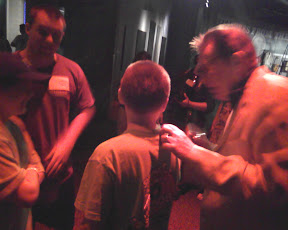
Last night I went to an event at the Rock and Roll Hall of Fame and Museum where Mike McCartney, who not surprisingly reminds me a great deal of his older brother Paul McCartney, gave a talk about his photography (and life in general). As Liverpudlians always seem to be, Mike is very charming and talkative, and he has had many interesting experiences.
In talking about his work, Mike expressed a love for taking pictures. To him, having a camera around so he can capture images is an important part of his life. I think it it his most profound way of expressing himself. I was very pleased to see him expressing the opinion that, although it is important to know how to use the medium (craft), the quality of the camera (technology) is of much less importance. I very briefly talked with him about this, and he and I agreed that WHAT you are doing with the camera (where you point it) is what it is all about.
Unfortunately, people I know who fancy themselves amateur and "professional" (I don't want to insult anyone with a "wannabe" prefix) photographers don't seem to get it. Maybe you can be a good photographer, but you can never be any kind of artist unless you understand this. Seeing an image taken with a decent cell phone camera, for instance, would INSPIRE an artist to dump the expensive Canon (not forever, just for a bit) and take a series of crude but cool photos. I have been inspired by my cell phone camera many times (although that doesn't make me a great artist either). The musical equivalent would be a toy piano or a cheesy electronic organ. Or a Danelectro guitar.
The extremely low-light (cell phone camera) photo above was taken at the Rock Hall today. Mike was signing autographs and generally just hanging out and being the lovely man that he is.
Wednesday, June 25, 2008
Cancún Vacation
Last week I traveled to Cancún with my wife Gayle, daughter Holly and son Matt. We all certainly needed a vacation, and we were glad to spend some time together. We went to an all-inclusive resort - you know the drill, all the food and drink is included. This was great for us as we felt uninhibited and ate a drank a lot. The food was great. The drink was plentiful (I got the most, but both kids had a quite a bit of alcohol on this trip).
It was beautiful and hot, and we would go again if the opportunity afforded itself. Check out our photos (this is just a sampling):
It was beautiful and hot, and we would go again if the opportunity afforded itself. Check out our photos (this is just a sampling):
Friday, May 30, 2008
"Summer" 2008 - Has it Started
It's been pretty chilly here - not quite summer - but we are trying to force our way into it. We shivered through an Indians game (if only we had been in the sun more the shorts would have been fine), went swimming (once), and now Cedar Point (on a very pleasant day).

How about those puffy cheeks from the "Rocket Sled" that is the front seat of Top Thrill Dragster.

Boilermaker
Sunday, May 11, 2008
Not Quite Gilligan's Island
I am headed to Cancun with my family very soon and we all may be in for some technology withdrawal. OK, so they have electricity, satellite TV, and some pretty lively entertainment, from what I've heard. Buses and boats and whatnot are plentiful too. Clearly our all inclusive hotel will qualify as an overindulgence of eat and drink. BUT ... no phone, no net, not a singly luxury ... as primitive as can be.
Although we should be able to get cell coverage, it will be absurdly expensive (for us impoverished gringos). We are all quite used to calling anyone, anywhere (in the US), any time, especially amongst ourselves. That's out.
I thought about using our FRS and GMRS radios that haven't seen the light of day for several years, but they aren't legal in Mexico. They have FRS (no GMRS) but our radios are not certified for Mexico. I might take a couple anyway, but my family always thought they were extremely hokey.
I have found that no hotels in the Cancun zona have free Internet of any kind and the only free Internet I have found was one spot at the airport. That would leave us paying $20/day at the hotel (I think) or something like $7/hour at a cafe. I'll probably have to spring for that.
Part of the purpose of the vacation (for me at least) is to get away from the keyboard, so maybe that's not so bad, but I hope the withdrawal symptoms can be mitigated with tequila.
It would be nice if the professor were there to figure out how to fix our cell phones and connect to the Internet with coconuts and bamboo.
Although we should be able to get cell coverage, it will be absurdly expensive (for us impoverished gringos). We are all quite used to calling anyone, anywhere (in the US), any time, especially amongst ourselves. That's out.
I thought about using our FRS and GMRS radios that haven't seen the light of day for several years, but they aren't legal in Mexico. They have FRS (no GMRS) but our radios are not certified for Mexico. I might take a couple anyway, but my family always thought they were extremely hokey.
I have found that no hotels in the Cancun zona have free Internet of any kind and the only free Internet I have found was one spot at the airport. That would leave us paying $20/day at the hotel (I think) or something like $7/hour at a cafe. I'll probably have to spring for that.
Part of the purpose of the vacation (for me at least) is to get away from the keyboard, so maybe that's not so bad, but I hope the withdrawal symptoms can be mitigated with tequila.
It would be nice if the professor were there to figure out how to fix our cell phones and connect to the Internet with coconuts and bamboo.
Tuesday, April 22, 2008
Direct TV Dumping Satellites for Blimps?
I look out my office window and see a Direct TV blimp fighting its way through the wind. I wonder: Is Direct TV dumping satellites for blimps?

Monday, April 21, 2008
Rock and Roll Boulevard
Greetings from the corner of Rock and Roll Boulevard and Lakeside Avenue in beautiful downtown Cleveland. While I was in Vail, Colorado last December, an announcement was made that one of the main streets here (the one that terminates at Lake Erie with the Rock and Roll Hall of Fame and Museum, East 9th Street) was being renamed "Rock and Roll Boulevard."
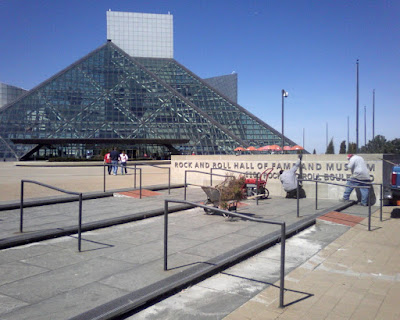
This was pretty cool for me, as a charter member (and frequent visitor) of the Rock Hall, a native Clevelander, and someone whose office overlooks the Rock Hall. I'm not sure if they made a big deal of the announcement - I was out of town, but they have very quietly put up street signs underneath the East Ninth signs that say Rock and Roll Boulevard. Last week they also changed the signage on the building itself (see photo). Woo hoo!
Wednesday, April 02, 2008
What Constitutes Technical Competance for an End User?
Unfortunately, IT people berate non-technical people all the time. Much of the time we don't understand why so many of them "don't get it" and why they are SO far behind. Although these attitudes are to be expected, they do not breed a good customer service environment. So try to put on your rose colored glasses and think that the glass is half full. There is (probably) a reason why this person is in the position they are - someone thought they were valuable (and people are WAY more valuable than machines - maybe not systems, but most machines - but that is a topic for another day).
With that respectful disclaimer in place, I have some ideas about good users vs. bad users. It's interesting, you have bitching and moaning from both of these. Good users bitch and moan constructively, and bad users, well, for many reasons. The constructive bitching and moaning is one way to tell the good from the bad.
What is the bad user bitching and moaning about? Sometimes it is everything. Nothing works. Everything sucks. Nothing is designed right. Everything is too slow. I have tried many times to turn such users away from the dark side and maybe I have even fixed a few of them - permanently - transforming them to competent users. Although this is a worthy goal, don't drive yourself crazy trying to save everyone from their (most likely self-inflicted) technological hell.
Just listen. Is there something they are doing wrong that you can correct? Is there something you can build to better accommodate their work?
Another way to differentiate the competent from the incompetent is by how well they can accomplish what they do with technology. Does it enable them, or get in their way? Most of the time we are not well qualified to make such judgments, but we are entitled to our opinions. Some people take what is given them and soar. Others get mired in problems they cannot overcome. I think we know which ones we'd rather have for customers, sponsors, etc.
With that respectful disclaimer in place, I have some ideas about good users vs. bad users. It's interesting, you have bitching and moaning from both of these. Good users bitch and moan constructively, and bad users, well, for many reasons. The constructive bitching and moaning is one way to tell the good from the bad.
What is the bad user bitching and moaning about? Sometimes it is everything. Nothing works. Everything sucks. Nothing is designed right. Everything is too slow. I have tried many times to turn such users away from the dark side and maybe I have even fixed a few of them - permanently - transforming them to competent users. Although this is a worthy goal, don't drive yourself crazy trying to save everyone from their (most likely self-inflicted) technological hell.
Just listen. Is there something they are doing wrong that you can correct? Is there something you can build to better accommodate their work?
Another way to differentiate the competent from the incompetent is by how well they can accomplish what they do with technology. Does it enable them, or get in their way? Most of the time we are not well qualified to make such judgments, but we are entitled to our opinions. Some people take what is given them and soar. Others get mired in problems they cannot overcome. I think we know which ones we'd rather have for customers, sponsors, etc.
Monday, March 24, 2008
Spell Check Fix Clarification
The MOSS 2007/WSS 3.0 spell check bug (that supposedly IS fixed in SP1, but I'd like to know how they fixed it) has had work arounds documented several times, but I'm not sure any of these were complete. Neither will this one be, but I have two observations I would like to share.
The other problem we have seen is that on the %windir%\temp folder (usually C:\Windows\Temp) on each of the web front ends, the Network Service needs the following permissions:
- You do not need to have any special permissions on the root of your site collection (just read).
- Spell check can also be broken with inadequate permissions in the %windir%\temp on the web front ends.
- View Items
- Browse Directories
- View Pages
- Use Remote Interfaces
- Open
The other problem we have seen is that on the %windir%\temp folder (usually C:\Windows\Temp) on each of the web front ends, the Network Service needs the following permissions:
- Traverse Folder/Execute File
- List Folder/Read Data
- Read Attributes
- Delete
- Read Permissions
Thursday, March 20, 2008
Backup/Restore "Duplicates" and Broken "Content and Structure" (Settings.aspx)
This took a couple hours of staring at things and looking at every side of everything. I had used STSADM to back up a site and restore it to another site collection. This went pretty well, except for two problems:
I tried deleting one of the lists. Oops. It deleted both (there really only was one). Hooray for the Recycle Bin!
The allitems.aspx for each list showed two web parts for the list (this is significant).
#2 Symptoms
You could navigate to any of the lists and stuff if you opened Content and Structure from another subsite, but you could not get to the root of this site.
Fix:
Delete the extra (duplicate) webparts from the allitems.aspx and all three problems went away.
Why? Ha! You tell me! But I am happier, and the users are happier. I'm just not very warm and fuzzy (welcome to my life with SharePoint).
- Two of the lists showed up twice in the "All Site Content" (viewlsts.aspx) and
- Content and Structure (settings.aspx) would error
I tried deleting one of the lists. Oops. It deleted both (there really only was one). Hooray for the Recycle Bin!
The allitems.aspx for each list showed two web parts for the list (this is significant).
#2 Symptoms
You could navigate to any of the lists and stuff if you opened Content and Structure from another subsite, but you could not get to the root of this site.
Fix:
Delete the extra (duplicate) webparts from the allitems.aspx and all three problems went away.
Why? Ha! You tell me! But I am happier, and the users are happier. I'm just not very warm and fuzzy (welcome to my life with SharePoint).
Monday, March 10, 2008
How to Move the Central Admin Site, Even if You Already Screwed it Up
Revised! And also see http://bobklass.blogspot.com/2008/07/moving-central-admin-again.html
Moving the Central Admin site the right way is easy:
Run config wiz on old, removing
Run config wiz on new adding
But what if you did something to screw that up, like:
Start Central Admin on new server (through Central Admin)
Stop Central Admin on old server (through Central Admin)
Run Configuration Wizard on new server
which would leave you with NO Central Admin server?
You will have to try a little harder if you really want to screw things up. To fix it:
Run Config Wizard on new and REMOVE central admin
Run Config Wizard on the old and remove central admin
Run Config Wizard on new and ADD central admin
Similarly, you probably could redo the old Central Admin if it were screwed up and then do it the right way once everything was back the way it should have been. The right way:
Run config wiz on old, removing
Run config wiz on new adding
That's all fine, but sometimes SharePoint just won't do things the right way. My production server didn't present the option to remove the Central Admin site (why?) until I removed it from the farm and added it back (and the first time I ran the Config Wizard it took over an hour!).
But then it looked like the "right way" wasn't working. Upon close inspection, everything seemed to be where it should be. The problem was that the alternative access mapping for Central Admin needed to be changed (it still showed the old server). So just put in an explicit address and include ../default.aspx and navigate to the maintenance page, or just use ../_admin/AlternateUrlCollections.aspx and then change it to your new Central Admin server.
Moving the Central Admin site the right way is easy:
Run config wiz on old, removing
Run config wiz on new adding
But what if you did something to screw that up, like:
Start Central Admin on new server (through Central Admin)
Stop Central Admin on old server (through Central Admin)
Run Configuration Wizard on new server
which would leave you with NO Central Admin server?
You will have to try a little harder if you really want to screw things up. To fix it:
Run Config Wizard on new and REMOVE central admin
Run Config Wizard on the old and remove central admin
Run Config Wizard on new and ADD central admin
Similarly, you probably could redo the old Central Admin if it were screwed up and then do it the right way once everything was back the way it should have been. The right way:
Run config wiz on old, removing
Run config wiz on new adding
That's all fine, but sometimes SharePoint just won't do things the right way. My production server didn't present the option to remove the Central Admin site (why?) until I removed it from the farm and added it back (and the first time I ran the Config Wizard it took over an hour!).
But then it looked like the "right way" wasn't working. Upon close inspection, everything seemed to be where it should be. The problem was that the alternative access mapping for Central Admin needed to be changed (it still showed the old server). So just put in an explicit address and include ../default.aspx and navigate to the maintenance page, or just use ../_admin/AlternateUrlCollections.aspx and then change it to your new Central Admin server.
Friday, February 29, 2008
Sharepoint Virtualization - Numero Drei
Hopefully I won't seem like a person who waffles. Or someone who jumps to conclusions. I have tried to be objective and I tried to make the testing meaningful. I will share here an unsanitized version of what I published to our team:
Our tests were performed with a two server MOSS 2007 farm with the same databases running on a fairly robust (physical) SQL cluster. One server was an indexer only, and the other served the SSP, web front end, etc. No special Sharepoint caching was turned on for any sites. The physical servers tested were HP servers with 2GB RAM and two (older) 3.4 ghz dual core processors in each. The virtual servers ran with 2GB RAM and variously 2 or 4 processors on an ESX system that I believe had two dual quad core machines and LOTS of RAM.
Three categories of test were performed:
Results were monitored from various sources - HP OpenView, Loadrunner, WAPT, Windows native, and subjective.
1. Indexing
Indexing virtual to virtual with 2 processor machines seemingly outperformed physical in all categories except CPU usage, which was significantly higher on the virtuals (though acceptable). The time to complete the index was almost the same for physical and virtual farms.
We did not have any HPOV data on the indexer.
2. Web Page Traffic
An older script was run with Loadrunner, simulating 250 users for 15 minutes. The script was web page views only. In general, the virtuals outperformed the physicals in these tests. Neither was overloaded.
3. Document Library - File and Search
A short script was created to download two large files (30 MB) repetitively and do some search queries. This is a realistic document library scenario of Intranet content being downloaded simultaneously by multiple users. The script was run with WAPT via several different PC's, with anywhere from 20 to 200 sessions simulated. The tests were run from the same part of the building and presumably through a small number of ports on the same network switch.
None of the systems performed this test well. Heavy file activity can be the bane of SharePoint's existence, even though we often use it as a document management system that is easy to use and access from any office. Large files are common, and access to such files usually cannot be managed (if it were managed, we could easily cache such files and more easily serve up large files to many users).
The physical servers were slow but remained responsive during this test. CPU utilization was usually below 50%, with some higher spikes. Four processor virtualized servers remained responsive during this test, but were very slow (slower than the physicals) and CPU utilization was between 30 and 75%, with some higher spikes. Two processor virtualized was almost non-responsive. CPU utilization rose to 100% and stayed there as long as the test was permitted to run. This happened for as few as twenty connections.
Conclusions
I don't want to draw too many conclusions until we have had further discussion of the testing. There may have been other limitations to tests 1 and 3 from the SQL server. Microsoft spends more time discussing SQL than it does SharePoint servers in the latest tuning info http://go.microsoft.com/fwlink/?LinkID=105621&clcid=0x409. I previously distributed this Microsoft tuning document (published in late December).
Microsoft recommends using 4 or 5 web front ends (without much qualification). Serving up files over 15 MB or having content databases over 50 GB is taxing on SharePoint and may degrade performance significantly. This latest tuning information from Microsoft is very conservative.
Our tests indicate that multiple processors are a key to maintaining reasonable performance from web front ends. Indexing seems to work fine from a virtual server.
So am I objective or what? My tests did little to confirm any of my original line of thinking.
Our tests were performed with a two server MOSS 2007 farm with the same databases running on a fairly robust (physical) SQL cluster. One server was an indexer only, and the other served the SSP, web front end, etc. No special Sharepoint caching was turned on for any sites. The physical servers tested were HP servers with 2GB RAM and two (older) 3.4 ghz dual core processors in each. The virtual servers ran with 2GB RAM and variously 2 or 4 processors on an ESX system that I believe had two dual quad core machines and LOTS of RAM.
Three categories of test were performed:
- Indexing performance
- Web page traffic
- Document library traffic/search queries
Results were monitored from various sources - HP OpenView, Loadrunner, WAPT, Windows native, and subjective.
1. Indexing
Indexing virtual to virtual with 2 processor machines seemingly outperformed physical in all categories except CPU usage, which was significantly higher on the virtuals (though acceptable). The time to complete the index was almost the same for physical and virtual farms.
We did not have any HPOV data on the indexer.
2. Web Page Traffic
An older script was run with Loadrunner, simulating 250 users for 15 minutes. The script was web page views only. In general, the virtuals outperformed the physicals in these tests. Neither was overloaded.
3. Document Library - File and Search
A short script was created to download two large files (30 MB) repetitively and do some search queries. This is a realistic document library scenario of Intranet content being downloaded simultaneously by multiple users. The script was run with WAPT via several different PC's, with anywhere from 20 to 200 sessions simulated. The tests were run from the same part of the building and presumably through a small number of ports on the same network switch.
None of the systems performed this test well. Heavy file activity can be the bane of SharePoint's existence, even though we often use it as a document management system that is easy to use and access from any office. Large files are common, and access to such files usually cannot be managed (if it were managed, we could easily cache such files and more easily serve up large files to many users).
The physical servers were slow but remained responsive during this test. CPU utilization was usually below 50%, with some higher spikes. Four processor virtualized servers remained responsive during this test, but were very slow (slower than the physicals) and CPU utilization was between 30 and 75%, with some higher spikes. Two processor virtualized was almost non-responsive. CPU utilization rose to 100% and stayed there as long as the test was permitted to run. This happened for as few as twenty connections.
Conclusions
I don't want to draw too many conclusions until we have had further discussion of the testing. There may have been other limitations to tests 1 and 3 from the SQL server. Microsoft spends more time discussing SQL than it does SharePoint servers in the latest tuning info http://go.microsoft.com/fwlink/?LinkID=105621&clcid=0x409. I previously distributed this Microsoft tuning document (published in late December).
Microsoft recommends using 4 or 5 web front ends (without much qualification). Serving up files over 15 MB or having content databases over 50 GB is taxing on SharePoint and may degrade performance significantly. This latest tuning information from Microsoft is very conservative.
Our tests indicate that multiple processors are a key to maintaining reasonable performance from web front ends. Indexing seems to work fine from a virtual server.
So am I objective or what? My tests did little to confirm any of my original line of thinking.
Saturday, February 23, 2008
Virtualizing SharePoint Part Deux
Be sure to also read the next part - Numero Drei
We are still not finished with our virtualization tests, but I had to document this early stage of enlightenment (especially since the part one post seems to have been pretty far off the mark). Since virtualization very likely will be a part of my SharePoint experience from now on, I imagine there will be a part 3, 4, etc.
The state of the art of virtualization is a lot better than I thought. One of our IT groups has been building out the infrastructure for VM such that the virtuals will have a much better future than physical machines. Using multiple dual quad core servers with scads of memory, VMWare ESX is pretty amazing stuff.
The purpose of this study is to determine our server needs for a build-out of SharePoint to include new farms in Europe and Asia with up to a terabyte of data in each, and increasing North American capacity to up to two terabytes. There are around 5000 users in 30+ locations (heavily weighted to North America). The current farm is smaller (4 machines in our North America data center and less than 200GB of content). It is currently running on brand new IBM boxes (our SQL cluster is a little bit older). New 64 bit multiple quad core SQL machines will be used (VERY physical - brutes) and all the disk is on SANs.
The way it looks from the early virtualization testing, my SharePoint future is all virtual. 100% virtual. Indexer, WFEs, apps (SQL will have those big, new 64 bit physical machines). For SharePoint servers, tested performance of a VM is comparable (often better) than physical, with so many other advantages that I probably won't want ANY physical servers for the buildout, and I will probably give up the physicals that we already have.
When I started this process I was concerned that the risks of going virtual were high. I am almost convinced that it is the best way to go for high availability and performance. It does not seem to save a lot of money, but it saves some. There may be some hard to quantify costs savings (administration, power, cooling, etc.) and fortunately I will not be under much pressure to put numbers on such things (I'd make them up!).
The final conclusions will come in future posts, but this is encouraging.
We are still not finished with our virtualization tests, but I had to document this early stage of enlightenment (especially since the part one post seems to have been pretty far off the mark). Since virtualization very likely will be a part of my SharePoint experience from now on, I imagine there will be a part 3, 4, etc.
The state of the art of virtualization is a lot better than I thought. One of our IT groups has been building out the infrastructure for VM such that the virtuals will have a much better future than physical machines. Using multiple dual quad core servers with scads of memory, VMWare ESX is pretty amazing stuff.
The purpose of this study is to determine our server needs for a build-out of SharePoint to include new farms in Europe and Asia with up to a terabyte of data in each, and increasing North American capacity to up to two terabytes. There are around 5000 users in 30+ locations (heavily weighted to North America). The current farm is smaller (4 machines in our North America data center and less than 200GB of content). It is currently running on brand new IBM boxes (our SQL cluster is a little bit older). New 64 bit multiple quad core SQL machines will be used (VERY physical - brutes) and all the disk is on SANs.
The way it looks from the early virtualization testing, my SharePoint future is all virtual. 100% virtual. Indexer, WFEs, apps (SQL will have those big, new 64 bit physical machines). For SharePoint servers, tested performance of a VM is comparable (often better) than physical, with so many other advantages that I probably won't want ANY physical servers for the buildout, and I will probably give up the physicals that we already have.
When I started this process I was concerned that the risks of going virtual were high. I am almost convinced that it is the best way to go for high availability and performance. It does not seem to save a lot of money, but it saves some. There may be some hard to quantify costs savings (administration, power, cooling, etc.) and fortunately I will not be under much pressure to put numbers on such things (I'd make them up!).
The final conclusions will come in future posts, but this is encouraging.
Tuesday, February 19, 2008
Holiday Valley February 16, 2008
After my first skiing trip to the Rockies last December I had hoped to get to someplace closer to home a bit sooner so I could evaluate my old skis vs. the hot new stuff I rented at Vail. I also wanted to judge the lameness of the comparative experience.
Too much time has passed, though, so I couldn't judge the skis. My long, old things seemed OK. The experience is what it is. A hill a third the length of somplace like Vail (but it feels like a fifth) and terain that probably isn't a fifth in size (you can't compare them, really). The snow was perfect at Vail vs. your typical Eastern ice in New York (ice is damn fast, though, and a challenge). The lines were a bit long this weekend too, but bearable. They were sledom long at Vail.
My conclusion is that I can still have fun on day trips to Holiday Valley, and do them like I always have, with healthy trips to the Hearth (my usual restaurant) and the bar, which is so unlike my Vail experience, where I only hit the bar afterwards.
I have a story of an altercation with one of the bartenders at the Yodeler Lodge bar. I ordered an Ellicottville Brewing Co. IPA (or pale ale) for Bryce and an Ellicottville Brewing Co. Amber for myself. She brought me back what looked and tasted like Miller Genuine Draft. I told her it was the wrong beer and she said it wasn't. I said the kegs were switched when she insisted it was right. She even poured another to show me. I told her it was OBVIOUSLY the wrong beer - the color was all wrong (that EBC Amber is very pretty in the glass, it doesn't look anything like Miller). She dramatically threw the one beer in the sink, asked me what I wanted then and took the other away. She practically threw my change at me. I should have thrown the tip at her.
Too much time has passed, though, so I couldn't judge the skis. My long, old things seemed OK. The experience is what it is. A hill a third the length of somplace like Vail (but it feels like a fifth) and terain that probably isn't a fifth in size (you can't compare them, really). The snow was perfect at Vail vs. your typical Eastern ice in New York (ice is damn fast, though, and a challenge). The lines were a bit long this weekend too, but bearable. They were sledom long at Vail.
My conclusion is that I can still have fun on day trips to Holiday Valley, and do them like I always have, with healthy trips to the Hearth (my usual restaurant) and the bar, which is so unlike my Vail experience, where I only hit the bar afterwards.
I have a story of an altercation with one of the bartenders at the Yodeler Lodge bar. I ordered an Ellicottville Brewing Co. IPA (or pale ale) for Bryce and an Ellicottville Brewing Co. Amber for myself. She brought me back what looked and tasted like Miller Genuine Draft. I told her it was the wrong beer and she said it wasn't. I said the kegs were switched when she insisted it was right. She even poured another to show me. I told her it was OBVIOUSLY the wrong beer - the color was all wrong (that EBC Amber is very pretty in the glass, it doesn't look anything like Miller). She dramatically threw the one beer in the sink, asked me what I wanted then and took the other away. She practically threw my change at me. I should have thrown the tip at her.
Tuesday, February 12, 2008
Virtualizing - Part 1
Be sure to read the other parts of this series (because it changes a lot!):
http://bobklass.blogspot.com/2008/02/virtualizing-sharepoint-part-deux.html
http://bobklass.blogspot.com/2008/02/sharepoint-virtualization-numero-drei.html
Hopefully it won't be a misnomer to call this part 1, but at this point I really don't have a lot of hard info, just my thoughts. Later, when we've tried it, I'll add more (we all hope, right?).
If you think about how the Sharepoint components work, it is easy to rule out SQL and indexers for virtualization (at least for a large farm, as we are deploying). That leaves web front ends, query servers and application servers (Excel, Infopath). We have run our farm with query server and web front end combined. The applications will be new to us very soon.
So for us, the low risk trial will be to use the (very beefy) virtuals for applications. This especially makes sense since these are processor intensive. With WFE's, there is too much risk of underperformance. What if the cache reads are too slow? We can't have it not work well.
So I am advocating that we proceed this way.
I've been lax with my posts as I try to rest my right arm - too many mouse clicks. Very painful. I'll be back!
Check out part deux.
http://bobklass.blogspot.com/2008/02/virtualizing-sharepoint-part-deux.html
http://bobklass.blogspot.com/2008/02/sharepoint-virtualization-numero-drei.html
Hopefully it won't be a misnomer to call this part 1, but at this point I really don't have a lot of hard info, just my thoughts. Later, when we've tried it, I'll add more (we all hope, right?).
If you think about how the Sharepoint components work, it is easy to rule out SQL and indexers for virtualization (at least for a large farm, as we are deploying). That leaves web front ends, query servers and application servers (Excel, Infopath). We have run our farm with query server and web front end combined. The applications will be new to us very soon.
So for us, the low risk trial will be to use the (very beefy) virtuals for applications. This especially makes sense since these are processor intensive. With WFE's, there is too much risk of underperformance. What if the cache reads are too slow? We can't have it not work well.
So I am advocating that we proceed this way.
I've been lax with my posts as I try to rest my right arm - too many mouse clicks. Very painful. I'll be back!
Check out part deux.
Subscribe to:
Posts (Atom)

